Recycling and Sustainability — Gardener Crouch End
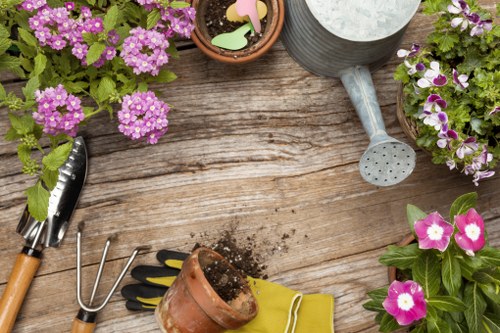 At Gardener Crouch End we treat sustainability as a core part of every job, from pruning to full-site clearance. Our approach to an eco-friendly waste disposal area and a sustainable rubbish gardening area means every branch, turf strip and pot is assessed for reuse, composting or correct recycling. As a local Crouch End gardener committed to low-impact practices, we work within the boroughs' waste separation frameworks to keep materials out of landfill and in circulation.
Our team of eco gardeners in Crouch End follows the practical separation of organics, paper, glass and mixed recycling that many North London boroughs promote. We apply the borough's emphasis on curbside sorting where possible — separating food and garden waste from dry recyclables — and bring site-sourced materials to appropriate facilities when collections aren’t available. The result is a tidy, sustainable rubbish gardening area that benefits soil health and reduces transport emissions.
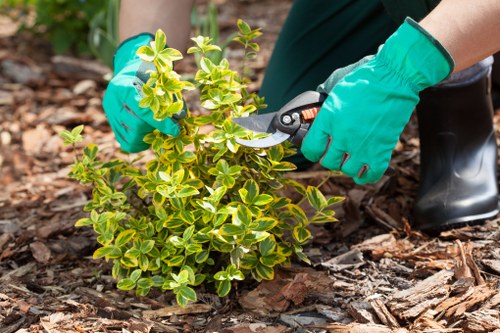
What we recycle and how
We prioritise reuse and local redistribution before recycling. Typical activity includes:- Segregating garden waste for on-site composting and community compost schemes;
- Collecting timber, bricks and stone for reclamation or local building reuse projects;
- Sorting pots, terracotta, and plastic plant carriers for recycling streams;
- Separating metals, glass and paper from residual waste for municipal processing.
Local transfer stations and responsible routes
We use recognised transfer stations and treatment centres in North London for materials that cannot be reused locally. Where appropriate we route green waste and mixed recyclables through authorised facilities such as Edmonton EcoPark and other licensed transfer stations that serve the Haringey and neighbouring boroughs. These facilities ensure materials enter the correct treatment stream — anaerobic digestion for food waste, or mechanical-biological treatment where required. Partnerships with charities and community reuse are essential to a circular approach. Gardener Crouch End partners with local community allotments, reuse charities and social enterprises to redistribute usable materials: soil, well-preserved timber, pots and garden furniture. We collaborate with food redistribution networks, tool-lending libraries and volunteering groups so that surplus resources support local amenity spaces and residents rather than becoming waste. This social dimension turns garden clearances into community benefits.
Low-carbon fleet and operational choices are built into our service model. Our fleet includes electric and plug-in hybrid vans, complemented by pedal cargo bikes for short urban trips where feasible. We prioritise route optimisation and consolidated collections so fewer journeys are needed. Key fleet features include:
- Zero-emission vans for inner-urban work and sensitive zones;
- Hybrid vehicles for flexible longer trips;
- Cargo bikes and hand-cart solutions for pedestrianised or restricted areas.
Designing a sustainable rubbish gardening area
In every garden we assess a designated waste-handling zone — a compact, well-signposted corner for segregated collection bins and composting bays. The sustainable gardener in Crouch End sets up layered composting systems, mulching stations and dry-material bins to keep the site tidy and reduce cross-contamination. Wherever possible we implement low-impact storage: permeable surfaces for run-off, shaded compost bays to preserve microbial activity, and enclosed timber bays to deter pests.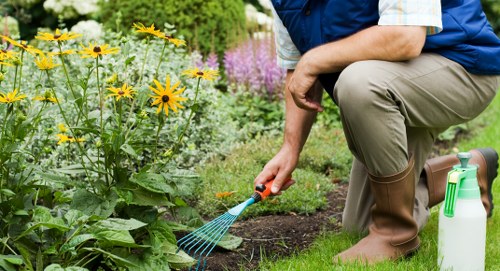
Targets and monitoring
Our measurable recycling percentage target is clear: we aim to achieve a 70% recycling and reuse rate across all projects by 2028. This target covers reuse, on-site composting, and materials sent to authorised recycling streams. We track performance through job-level audits, weight-based reporting where possible, and periodic reviews with partner transfer stations. By sharing anonymised metrics with community stakeholders we ensure transparency and continuous improvement.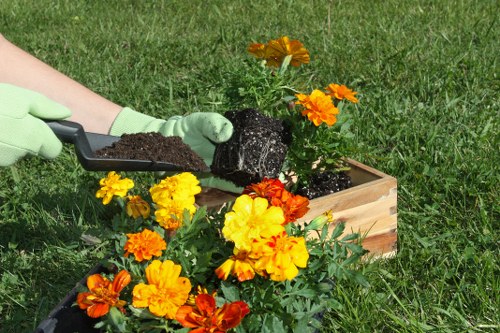 Commitment to low-carbon practices remains a constant. The Gardener Crouch End team invests in training on waste separation, minimising contamination and recognising salvageable items. We also support borough-level initiatives to improve household and commercial recycling standards, aligning our operations with local policies to separate organics, recyclables and residual waste effectively. As an eco gardener in the Crouch End area, our day-to-day choices — from vehicle selection to composting technique — contribute to cleaner streets and healthier soils.
Why choose a sustainable gardener in Crouch End? Choosing our services prioritises circular outcomes: materials are kept in use, soils are regenerated with quality compost, and fewer emissions are produced through smarter logistics. Our collaboration with charities, transfer stations and municipal systems creates a dependable hierarchy of reuse, recycle and responsible disposal that protects local green spaces.
We celebrate small-scale circular economy wins — reclaimed timber benches, redistributed pots, and community compost that enriches allotments. The Gardener Crouch End promise is simple: reduce waste, boost biodiversity and support local networks while keeping your garden functional and beautiful.
Our sustainability plan is evolving, and we welcome alignment with borough strategies and community projects. Through practical, accountable steps — targets, partnerships, and low-carbon operations — we aim to set a high standard for gardeners across North London and anchor sustainability in every outdoor space we touch.